



Local SEO vs. Traditional SEO: Which Strategy Helps Businesses Grow?
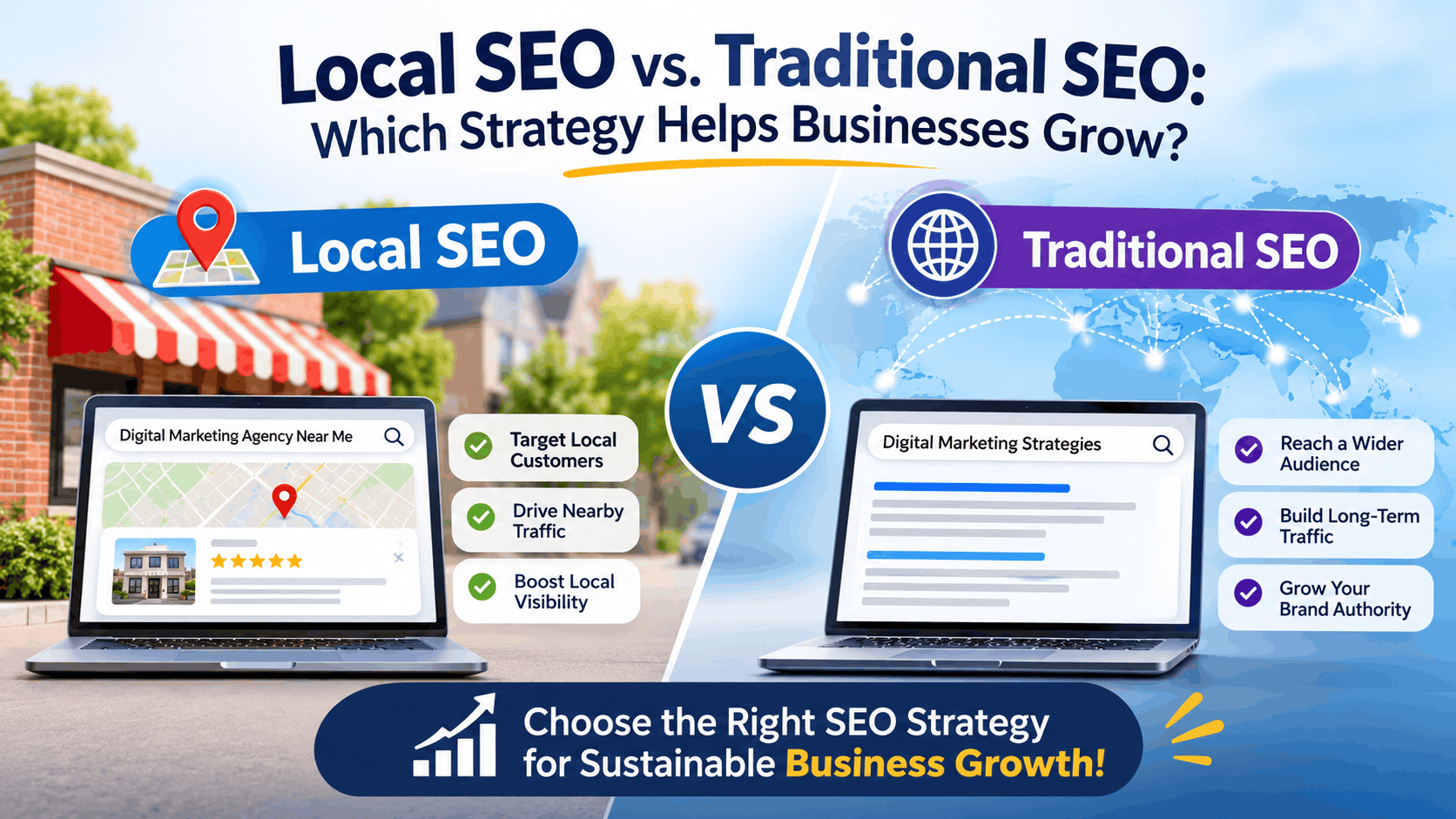
Every business wants to attract customers through search engines. However, a local service provider targeting nearby customers has different marketing goals from an e-commerce company reaching customers nationwide.
This is where understanding Local SEO vs. Traditional SEO becomes important. Both strategies improve organic search visibility, attract relevant visitors, and support business growth. However, they differ in their target audiences, optimization techniques, and objectives.
Let’s explore their differences, benefits, and how businesses can use both strategies effectively.
What Is Local SEO?
Local SEO (Local Search Engine Optimization) helps businesses improve their visibility in location-based search results. It is particularly useful for businesses that serve customers in specific cities, towns, or geographic areas.
For example, someone searching for “digital marketing agency near me” or “plumber in New Jersey” is looking for a service provider in a particular location.
Key Local SEO Strategies
- Google Business Profile: Maintain accurate business information, services, contact details, and operating hours.
- Local keywords: Include relevant location-based keywords in website content and headings.
- Customer reviews: Encourage genuine reviews and respond professionally to customer feedback.
- Local citations: Maintain consistent business information across relevant directories.
- Location pages: Create useful pages for the areas your business genuinely serves.
- Local backlinks: Build relationships with relevant local organizations and publications.
Google provides useful guidance on improving local ranking, including the importance of relevance, distance, and prominence.
What Is Traditional SEO?
Traditional SEO focuses on improving a website’s organic visibility for broader search queries without making a specific geographic location the primary targeting requirement.
It is suitable for businesses that want to reach audiences across multiple cities, states, or countries.
For example, an e-commerce company selling fitness equipment may target “best home workout equipment” to attract customers from different locations.
Key Traditional SEO Strategies
- Keyword research: Identify relevant keywords based on search intent and audience requirements.
- On-page SEO: Optimize page titles, meta descriptions, headings, and internal links.
- Technical SEO: Improve website speed, mobile usability, crawling, and indexing.
- Content marketing: Publish informative blogs, guides, and service pages.
- Link building: Earn relevant backlinks from trustworthy websites.
Google’s SEO Starter Guide explains important practices for creating search-friendly websites.
For additional guidance, explore our article on 10 On-Page SEO Best Practices to Boost Organic Traffic.
Local SEO vs. Traditional SEO: Key Differences
Both strategies improve search visibility, but their priorities depend on the audience a business wants to reach.
| Area | Local SEO | Traditional SEO |
|---|---|---|
| Primary Goal | Attract customers in a specific area | Reach broader audiences |
| Target Audience | Local customers | National or international audiences |
| Main Focus | Google Business Profile, reviews, citations | Website content, technical SEO, backlinks |
| Search Visibility | Local map results and location-based listings | General organic search results |
| Keywords | Digital marketing agency in New Jersey | Digital marketing strategies |
| Backlinks | Relevant local websites | Industry-related websites |
| Best Suited For | Restaurants, clinics, local service providers | E-commerce, publishers, national brands |
| Success Metrics | Calls, local leads, direction requests | Organic traffic, rankings, conversions |
The main distinction is geographic targeting. Local SEO focuses on location-based visibility, while Traditional SEO targets broader search opportunities.
Benefits of Local SEO for Businesses
Local SEO can help businesses connect with customers who are actively searching for nearby products or services.
- Better local visibility: Optimizing your Google Business Profile and website can improve your opportunities to appear in relevant local searches.
- More relevant inquiries: Location-based keywords help attract people looking for services in your operating areas.
- Increased customer trust: Genuine customer reviews and accurate business information help potential customers evaluate your business.
- Better mobile visibility: A mobile-friendly website and updated business details make it easier for nearby customers to contact you.
- Stronger local recognition: Consistent online information and relevant local content help establish your business within its target community.
Benefits of Traditional SEO for Business Growth
Traditional SEO helps businesses attract audiences beyond their immediate geographic markets.
- Wider audience reach: Target industry-related keywords to attract visitors from different locations.
- Long-term organic traffic: Useful website content can continue attracting visitors over time without paying for every click.
- Industry authority: Publishing informative articles and resources helps demonstrate expertise and build topical relevance.
- Broader lead generation: Businesses offering online services or products can attract customers across multiple markets.
- Better digital marketing support: SEO content can also support email marketing, social media, and other promotional activities.
Read our guide on how to strategize digital marketing to promote your business for additional marketing insights.
Which SEO Strategy Is Right for Your Business?
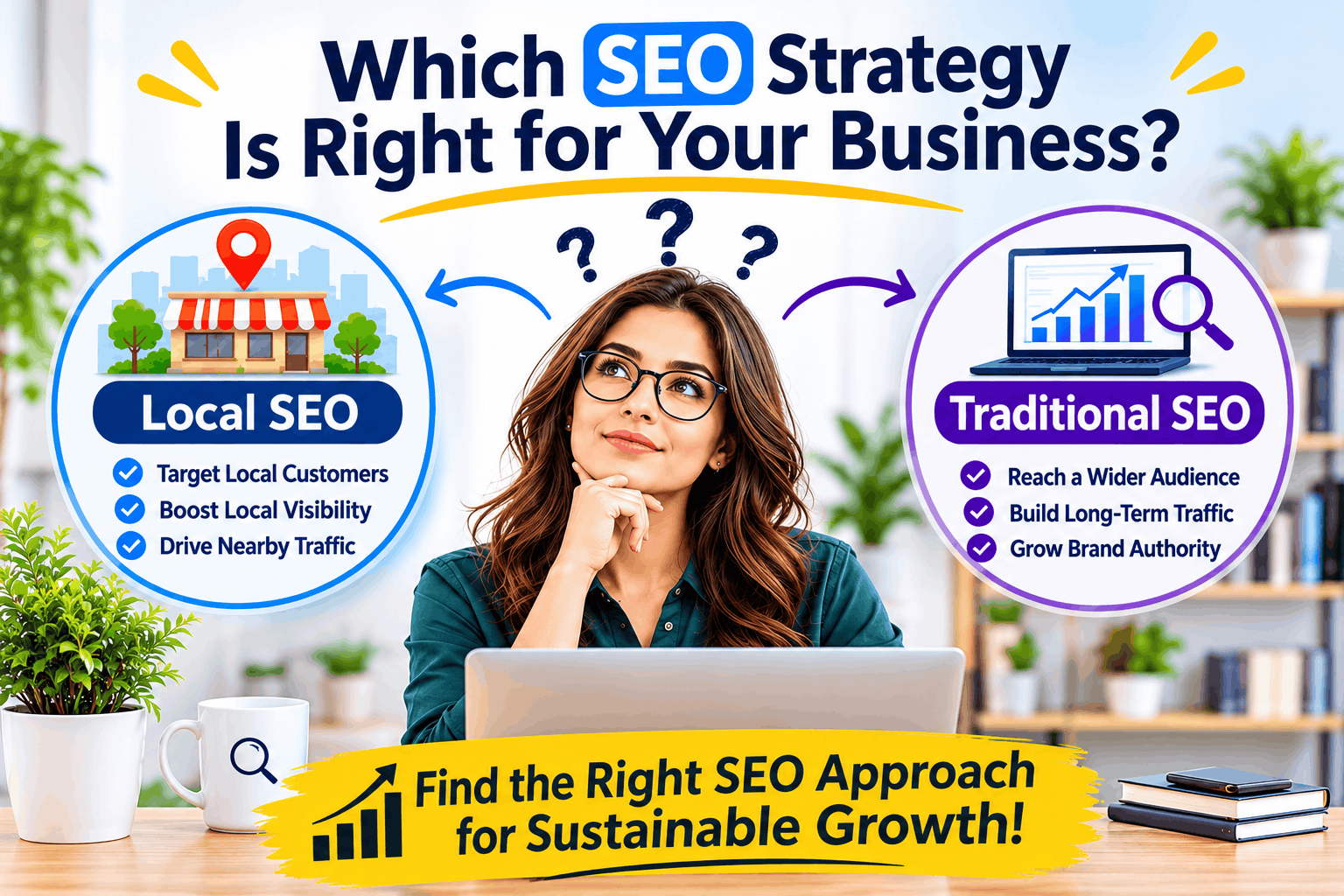
The right approach depends on your business model, audience, and growth objectives.
Choose Local SEO If:
- You operate a physical store, clinic, restaurant, or local service business.
- You serve customers in specific geographic areas.
- You want more local calls, appointments, and inquiries.
- Your business competes with other providers in the same location.
Example: A dental clinic in New Jersey should prioritize local keywords, Google Business Profile optimization, customer reviews, and location-specific service pages.
Choose Traditional SEO If:
- You sell products or services across multiple markets.
- You operate an e-commerce website.
- You provide services online without geographic restrictions.
- You want to attract broader industry-related search traffic.
Example: An online education company can target educational keywords, publish useful guides, and improve website content to attract students from different countries.
Can Businesses Use Both Local SEO and Traditional SEO?
Absolutely. A digital marketing agency serving clients locally and nationally can combine both strategies.
It can optimize its Google Business Profile, create relevant location pages, publish educational blogs, and build industry-related backlinks.
Combining both approaches helps businesses attract local customers while developing broader organic visibility.
How to Build an Effective SEO Strategy
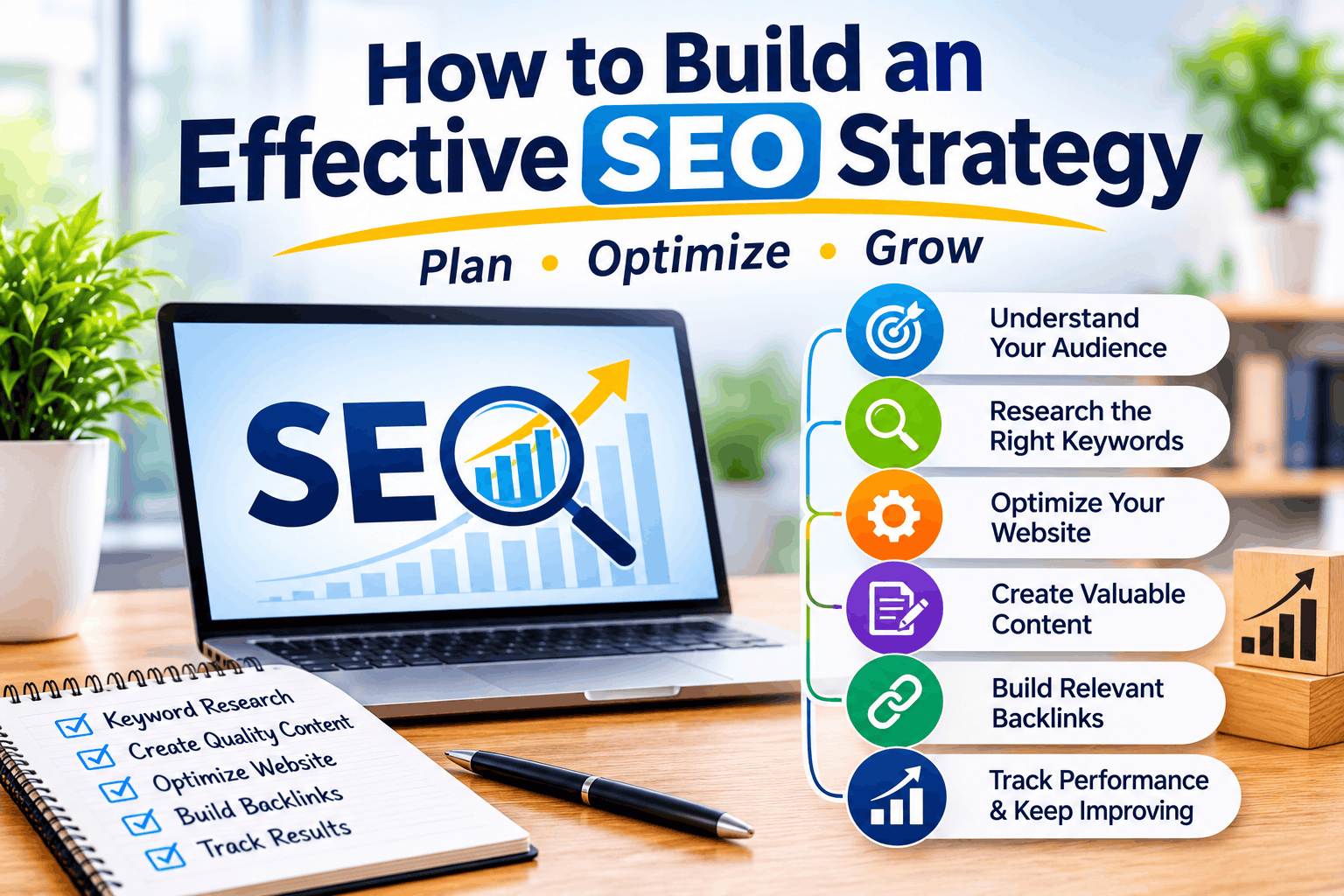
Regardless of your preferred approach, follow these essential steps:
- Understand your audience: Identify customer requirements, locations, and search behavior.
- Research keywords: Select relevant keywords based on search intent rather than search volume alone.
- Optimize your website: Improve page titles, headings, mobile usability, website speed, and indexing.
- Publish valuable content: Create informative pages and articles that answer customer questions.
- Build relevant backlinks: Focus on trustworthy websites related to your location or industry.
- Track performance: Monitor organic traffic, conversions, search visibility, and qualified leads.
You can use Google Search Console to monitor search performance and Google Analytics to understand website visitor behavior.
For technical improvements, refer to our Technical SEO Checklist.
Understanding Local SEO vs. Traditional SEO helps businesses choose the right approach to improve online visibility and attract relevant customers.
Local SEO is ideal for businesses targeting specific geographic areas, while Traditional SEO helps companies reach broader audiences through organic search.
However, businesses do not always need to choose one over the other. Combining both strategies can strengthen online visibility, generate qualified leads, and support sustainable growth.
At Sigur Solutions, we help businesses strengthen their digital presence through strategic digital marketing and website optimization. Connect with Sigur Solutions to explore an SEO strategy aligned with your business goals.