Why Understanding Your Target Audience is Crucial for Business Success

by | Dec 31, 2024 | Marketing Strategies

Why Understanding Your Target Audience is Crucial for Business Success
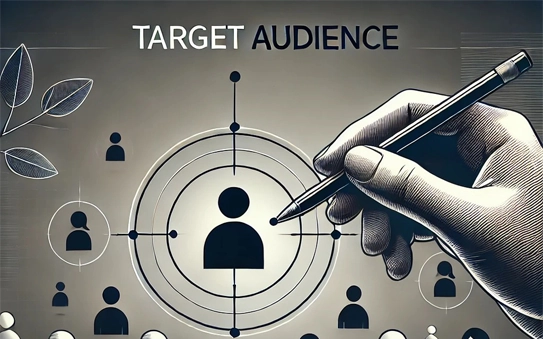
 

In today’s competitive business environment, understanding your target audience isn’t just beneficial—it’s essential. This practice is the cornerstone of effective digital marketing strategies and helps businesses thrive in an ever-evolving online landscape. Knowing your audience goes beyond basic demographics; it delves into behaviors, preferences, pain points, and values. Here’s why this insight is pivotal for business growth and sustainability.

1. Tailored Marketing Strategies

When you know your audience, you can craft personalized marketing messages that resonate deeply. Generic campaigns often fall flat, but targeted strategies capture attention and drive engagement. By addressing specific needs and desires, your business can achieve better results in areas like search engine optimization (SEO), social media marketing, and email marketing.

2. Improved Product Development

Understanding your audience helps you design products or services that truly solve their problems. Feedback from your target market allows you to refine offerings, ensuring they are relevant and valuable. This customer-centric approach increases satisfaction and retention, key aspects of successful digital branding.

3. Efficient Resource Allocation

Investing time and money in strategies that don’t align with your audience wastes resources. By focusing on what your customers care about, you can allocate budgets more effectively to paid search campaigns, content marketing, or influencer collaborations, ensuring higher returns on investment.

4. Enhanced Customer Relationships

Knowing your audience fosters trust. When customers feel understood, they’re more likely to remain loyal. This emotional connection often translates to positive reviews, social proof, and word-of-mouth referrals, which are invaluable for improving your online reputation.

5. Staying Ahead of Competitors

In-depth audience insights give you a competitive edge. By analyzing customer data through tools like Google Analytics or CRM platforms, you can identify emerging trends and preferences, staying ahead in areas such as PPC advertising and social media trends.


Understanding your target audience isn’t just about knowing who they are—it’s about recognizing what drives them. In the digital marketing realm, businesses that prioritize audience insights are better equipped to optimize SEO, launch impactful campaigns, and achieve long-term success. Start prioritizing your audience today, and watch your business thrive in the digital world.

Getting traffic to your website is important, but traffic alone does not generate business. If visitors arrive, browse a few pages, and leave without contacting you, requesting a quote, booking a consultation, or making a purchase, your website may have a conversion problem.

Website conversions are the actions you want visitors to take after arriving on your site. Depending on your business, a conversion could be a form submission, phone call, appointment booking, purchase, demo request, or another meaningful action.

The goal of website conversion optimization is simple: help more of the visitors you already attract take the next step.

Why Website Visitors Leave Without Converting

Visitors rarely leave for just one reason. Poor user experience, unclear messaging, weak calls to action, slow pages, and a lack of trust can all create friction.

Recent conversion research continues to identify unclear value propositions, weak CTAs, poor navigation, slow experiences, and complicated lead capture as common barriers between website traffic and conversions.

Understanding these problems can help you identify where your website is losing potential leads.

1. Your Website Does Not Explain Your Value Clearly

When someone lands on your website, they should quickly understand what your business offers, who you help, and why they should consider you.

A headline such as “We Deliver Excellence” does not tell visitors much.

Instead, your main message should communicate a specific benefit and make your offering easy to understand.

Ask yourself: Can a first-time visitor understand what my business does within a few seconds?

If the answer is no, unclear messaging may be hurting your website conversions.

2. Your Website User Experience Creates Friction

A website can look attractive but still be difficult to use.

Visitors may struggle with confusing navigation, crowded layouts, difficult-to-read content, intrusive pop-ups, or poorly organized information.

Good website user experience should make it easy for visitors to move from one step to the next.

Your navigation should be logical, important information should be easy to find, and each important page should have a clear purpose.

3. Your Calls to Action Are Too Weak

Visitors may be interested in your service but still leave because they do not know what to do next.

A generic “Submit” or “Click Here” button provides little motivation.

Use clear, action-oriented calls to action such as:

  • Request a Free Quote
  • Schedule a Consultation
  • Get Started Today
  • Book a Demo
  • Talk to Our Team

Place relevant CTAs where visitors naturally make decisions, rather than forcing them to search for a contact option.

4. Your Website Is Slow or Difficult to Use on Mobile

Website performance affects the overall user experience. A slow-loading page can create frustration before visitors even see your offer.

Mobile usability is equally important. Visitors should be able to read your content, navigate your pages, tap buttons, and complete forms comfortably from a smartphone.

Google’s Search Central documentation also emphasizes page experience and provides guidance for how websites can improve their search appearance and technical implementation.

Review your important landing pages regularly on both desktop and mobile devices.

5. Your Website Does Not Build Enough Trust

Visitors need a reason to believe that your business can deliver what it promises.

Trust signals can include:

  • Customer testimonials
  • Reviews
  • Case studies
  • Client logos
  • Certifications
  • Awards
  • Clear business information
  • Professional photography
  • Guarantees or relevant policies

Place appropriate trust signals close to important conversion points. When visitors are deciding whether to contact or purchase from you, reassurance can make the next step easier.

6. Your Forms Ask for Too Much Information

Long or complicated forms can discourage potential customers.

If someone only wants to request a consultation, asking for extensive information may create unnecessary friction.

Start by identifying what information your sales team genuinely needs at the first stage. Keep the form simple and make it easy to complete on mobile.

For higher-intent prospects, additional information can be collected later in the customer journey.

7. Your Content Does Not Match Visitor Intent

Not every visitor arrives at the same stage of the buying journey.

Someone searching for general information may not be ready to request a quote. Someone visiting a pricing or service page may have much stronger purchase intent.

Your content and CTAs should reflect these differences.

For example, an educational blog post might encourage visitors to explore a related guide, while a service page can use a stronger CTA such as Request a Consultation.

Matching content with visitor intent can help improve website engagement and conversions.

How to Turn Website Traffic Into Leads

Improving website conversions does not necessarily mean rebuilding your entire website.

Start by analyzing where visitors are dropping off. Review analytics data, conversion paths, landing-page performance, form submissions, and CTA interactions to identify the biggest problems.

Then prioritize improvements such as:

Clarify your message: Make your value proposition immediately understandable.

Improve navigation: Help visitors find important information quickly.

Strengthen CTAs: Give every important page a clear next step.

Build trust: Add relevant reviews, testimonials, case studies, and credentials.

Optimize mobile experience: Make pages, buttons, menus, and forms easy to use on smaller screens.

Simplify forms: Remove unnecessary fields and reduce friction.

Match content to intent: Give visitors information and CTAs appropriate to where they are in the buying journey.

These improvements form the foundation of effective conversion rate optimization.

Measure Website Conversions, Not Just Traffic

Website traffic is useful, but it should not be your only success metric.

Track actions that contribute to business growth, including:

  • Contact form submissions
  • Quote requests
  • Phone calls
  • Appointment bookings
  • Demo requests
  • Purchases
  • Downloads or sign-ups

Compare these actions against your traffic to understand your website conversion rate and identify opportunities for improvement.

A website that attracts fewer visitors but converts those visitors effectively can generate more business than a website with large amounts of traffic and very few leads.

Turn More Visitors Into Business Opportunities

Your website should do more than attract visitors. It should help those visitors understand your business, build confidence, and take the next step.

If your website is generating traffic but not enough enquiries or sales, focus on website conversions rather than simply trying to attract more visitors.

Clear messaging, better user experience, stronger CTAs, trust signals, mobile optimization, simpler forms, and relevant content can remove the barriers that prevent visitors from taking action.

Ultimately, successful website conversion optimization is about making it easier for the right visitors to become leads—and giving your business more value from the traffic you are already generating.