Generative Engine Optimization (GEO): The Future of SEO
by | Nov 30, 2025 | SEO | 0 comments

The digital world is undergoing a transformation unlike anything we’ve seen before. As we enter 2025, traditional SEO is no longer the only path to online visibility. With the rise of AI-driven tools such as ChatGPT, Google Gemini, and Perplexity, users are shifting from keyword-based searches to natural, conversational queries. Instead of scrolling through pages of search results, people now expect instant, synthesized answers from AI assistants. This shift has paved the way for a powerful new strategy: Generative Engine Optimization (GEO) — the future of SEO.

What Is Generative Engine Optimization (GEO)?

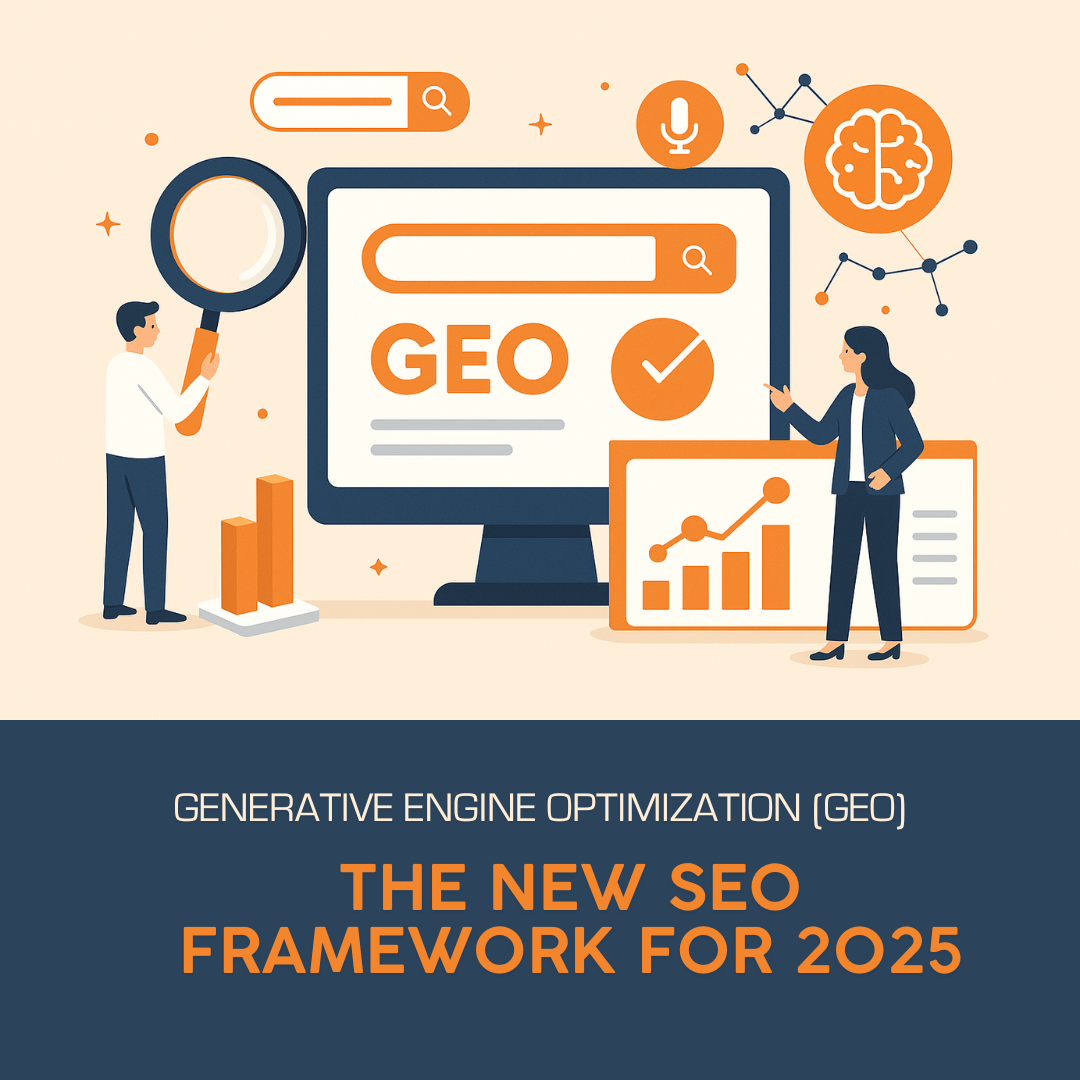
Generative Engine Optimization (GEO) refers to optimizing content not just for search engines, but for AI-driven generative platforms. While traditional SEO focuses on ranking, keywords, metadata, and backlinks, GEO focuses on whether AI systems can understand, interpret, and cite your content. In an AI-first world, the goal is no longer to simply appear on Google’s first page — it is to become part of the answers AI generates for users.

In 2025, AI has become the new gateway to information. When someone asks, “What’s the best CRM for small businesses this year?” or “How do I reduce marketing costs without hurting ROI?” they expect a conversational answer crafted by an AI system. If your brand’s content isn’t optimized for generative engines, it risks being invisible.

Why GEO Is the Future of SEO

AI assistants have now become the first stop for product recommendations, troubleshooting, how-to guides, and educational queries. With millions of people relying on AI platforms daily, GEO offers brands a chance to position their content directly inside AI-generated responses. Here’s why GEO matters today more than ever:

  1. AI Answers Replace Traditional Searches

Users no longer browse multiple websites—they ask AI and trust the response. This means generative engines must fully understand your content to reference it. GEO ensures your content is visible inside AI-generated summaries, recommendations, and explanations.

  1. Conversational Search Dominates 2025

Instead of typing short keywords like “best CRM 2025,” users now ask full-sentence questions:

  • “Which CRM software is best for small companies this year?”
  • “What’s the easiest way to automate my marketing?”

GEO focuses on optimizing your content for natural language and search intent, which AI platforms prioritize.

  1. Brands Must Adapt or Lose Visibility

Companies still relying on traditional SEO risk falling behind. To stay relevant in 2025, businesses must optimize for generative engines that decide what content appears inside AI-produced answers.

How GEO Works: 5 Key Principles

To help brands thrive in this AI-first era, here are the core principles of Generative Engine Optimization:

  1. Structured Content for AI Comprehension

Content needs clear headings, lists, tables, and organized sections. Structured content helps AI models identify important insights quickly and accurately. The more organized your content is, the more likely it will be cited in AI-generated responses.

  1. Authoritative, Data-Backed Insights

Generative engines prefer content backed by credible sources, facts, statistics, and expert knowledge. Content with real data demonstrates authority, which increases the likelihood of being included in AI-generated explanations.

  1. Context-Rich, Long-Form Content

AI systems rely on detailed context to answer user queries accurately. Long-form, comprehensive content performs better because it gives AI more material to understand. In-depth guides and detailed articles are essential for GEO success.

  1. Citable, Clear Statements

Short, strong, authoritative statements improve your chances of being referenced by AI. These “citable snippets” help AI extract precise answers and include your brand in its responses.

  1. Conversational Intent Optimization

In 2025, optimizing for how users speak — not just what they type — is essential. GEO focuses on aligning your content with real conversational questions and user intent, ensuring AI platforms interpret your content correctly.

GEO vs Traditional SEO: What’s Changing?

While traditional SEO remains valuable, it is no longer enough on its own. The biggest difference is the shift from ranking to relevance within AI systems. GEO is about:

  • Increasing your content’s chances of being included in AI-generated answers
  • Optimizing for conversational queries
  • Enhancing clarity, structure, and authority
  • Preparing your brand for AI-powered visibility

The brands that embrace GEO will maintain strong visibility, while those that rely solely on old SEO techniques risk disappearing from AI-driven discovery.

The Future of SEO in 2025 and Beyond

Generative Engine Optimization is not just a trend — it’s the natural evolution of SEO. As AI continues to dominate how people search, learn, and make decisions, GEO will become the foundation of digital marketing strategies. Brands that adopt GEO early will build stronger authority, appear more frequently in AI-generated responses, and create lasting visibility in an AI-first world.

At Sigur Solutions, we help businesses develop AI-ready GEO strategies built for the future of search. With the right approach, your content can become part of the answers shaping user decisions in 2025 and beyond.

If you’ve noticed a decline in website clicks despite maintaining strong search rankings, you’re not alone. The way people search online is rapidly evolving, and zero-click search is one of the biggest reasons behind this shift.

Today, users often get the answers they need directly on Google through featured snippets, knowledge panels, People Also Ask sections, and AI-generated summaries, without ever clicking on a website. For digital marketers and business owners, this creates a major challenge: how do you stay visible when users don’t even visit your site?

The good news? Zero-click search doesn’t mean the end of SEO. It means your strategy needs to evolve.

What Is Zero-Click Search?

Zero-click search refers to a search result where users find the information they need directly on the search engine results page (SERP), eliminating the need to click on a website.

For example:

You search for “What is digital marketing?” and Google immediately displays a definition in a featured snippet.

Or when searching for “weather today”, Google provides an instant answer.

With the rise of Google AI Overviews, this behavior is growing even faster, as Google now summarizes answers from multiple sources at the top of search results.

According to Google’s evolving search experience, the goal is to help users access information faster and more efficiently. This means businesses must rethink how they approach visibility and content strategy.

For more insights into how AI is reshaping search behavior, read our previous blog on The Future of SEO: Preparing Your Content for Generative AI at
https://sigursolutions.com/the-future-of-seo-preparing-your-content-for-generative-ai/

Why Is Website Traffic Changing?

The reality is simple: search behavior has changed.

Previously, users searched → clicked → read.

Now, the journey increasingly looks like this:

Search → Instant Answer → Exit

This doesn’t mean SEO is failing. Instead, search engines are becoming answer engines.

Several factors are driving this shift:

  1. Google AI Overviews

Google now uses AI to summarize information from multiple sources, reducing the need for users to click individual websites.

Learn more from Google Search Central:
https://developers.google.com/search

  1. Featured Snippets

Google extracts concise information and displays it directly in search results.

  1. Voice Search Growth

Voice assistants prioritize short, direct answers, increasing zero-click behavior.

  1. Mobile Search Habits

Mobile users prefer quick answers instead of browsing multiple pages.

For marketers, this means traditional SEO metrics alone are no longer enough. Ranking #1 matters—but visibility without clicks is becoming equally important.

How Zero-Click Search Impacts Digital Marketing

The biggest impact of zero-click search is reduced organic traffic.

However, smart marketers are adapting by shifting focus toward:

  • Brand visibility
  • Authority building
  • Featured snippet optimization
  • AI search discoverability
  • Generative Engine Optimization (GEO)

Instead of only asking:

“How do I rank?”

Businesses now need to ask:

“How do I become the source Google and AI tools trust?”

This is where AI search visibility becomes critical.

If you’re new to GEO, explore our guide:
https://sigursolutions.com/generative-engine-optimization-geo-the-future-of-seo/

How to Adapt to Zero-Click Search

The key to surviving—and thriving—in a zero-click search environment is optimization.

Here are practical strategies businesses should implement:

  1. Optimize for Featured Snippets

Structure your content to answer questions clearly.

Use:

  • Short paragraphs
  • Bullet points
  • FAQs
  • Step-by-step explanations

For example, instead of writing long blocks of text, answer common questions directly:

What is zero-click search?
Zero-click search happens when users get answers directly on search results without visiting a website.

This increases your chances of appearing in snippets.

  1. Focus on Topical Authority

Search engines trust websites that consistently publish high-quality content around a specific subject.

Instead of isolated blogs, build content clusters around:

  • SEO
  • Website development
  • Social media marketing
  • AI search optimization

This helps improve both search visibility and authority.

  1. Optimize for AI Search Engines

Search is no longer limited to Google.

Tools like ChatGPT, Gemini, and Perplexity are influencing how users discover information.

Content should be:

  • Well-structured
  • Conversational
  • Fact-based
  • Easy to summarize

Our blog on A Practical Guide to GEO: How to Optimize Your Content for AI Search Engines explains this in detail:
https://sigursolutions.com/a-practical-guide-to-geo-how-to-optimize-your-content-for-ai-search-engines/

  1. Measure the Right Metrics

Instead of focusing only on clicks, track:

  • Brand impressions
  • Engagement
  • Search visibility
  • Featured snippet appearances
  • Search Console performance

Google Search Console remains one of the best tools to understand traffic shifts and user behavior.

The Future of SEO in a Zero-Click World

Zero-click search isn’t killing SEO—it’s transforming it.

Businesses that rely only on traditional rankings may struggle, while those that prioritize visibility, authority, and AI optimization will continue to grow.

The future belongs to brands that create helpful, structured, and trustworthy content that search engines want to feature.

In a world where users increasingly get answers instantly, your goal is no longer just earning clicks—it’s becoming the trusted source behind those answers.

The rise of zero-click search is changing website traffic patterns, but it also creates new opportunities for brands willing to adapt.

By optimizing for featured snippets, improving AI search visibility, and embracing Generative Engine Optimization (GEO), businesses can remain visible—even when clicks decrease.

Search is evolving. The question is: Is your strategy evolving with it?