


Instagram SEO Best Practices: Increase Visibility and Grow Organically
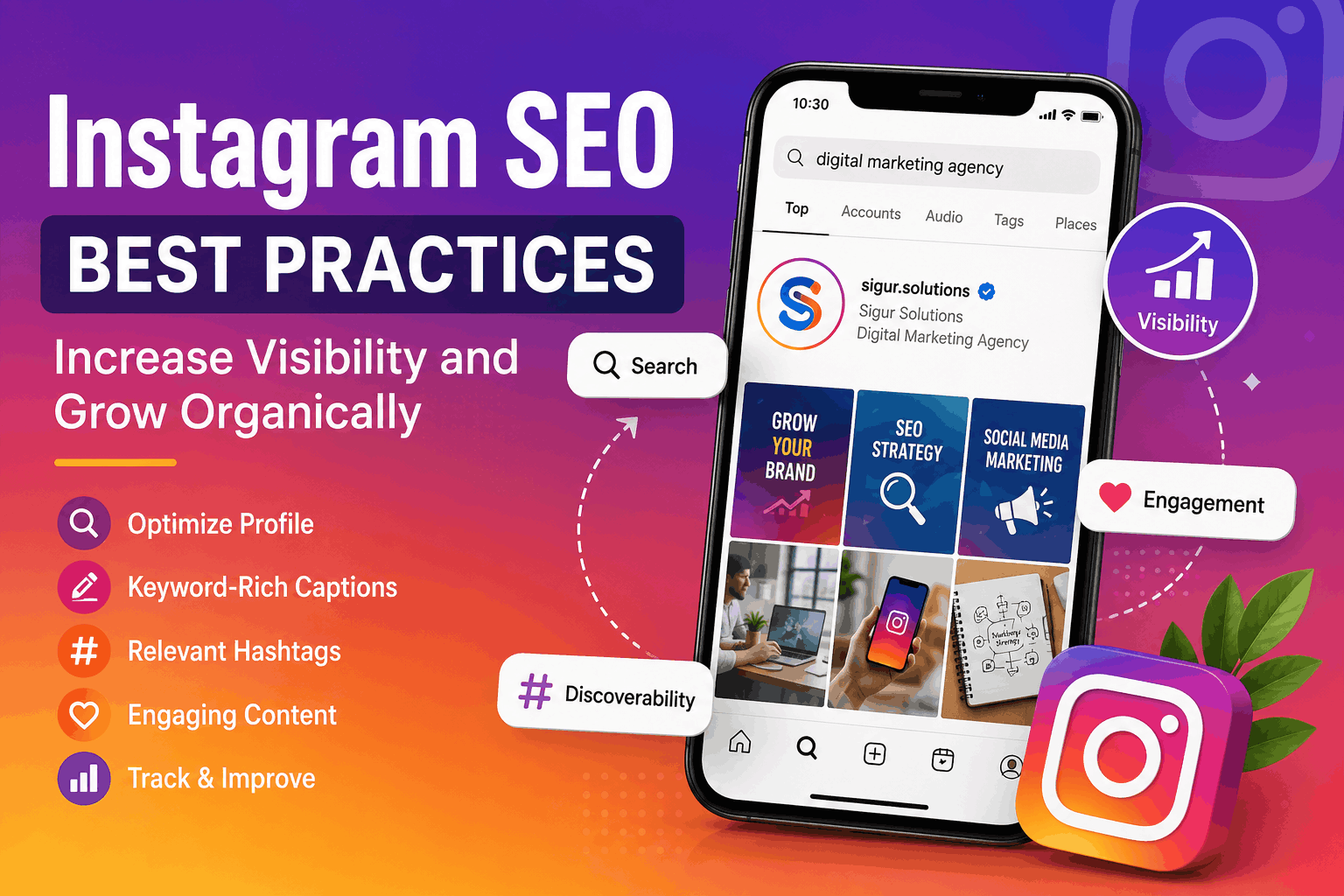
Instagram is no longer just a platform for sharing photos and videos—it has evolved into a powerful search engine. Whether users are looking for a local café, a digital marketing agency, a fitness coach, or product recommendations, many now begin their search directly on Instagram.
This shift has made Instagram SEO an essential part of every business’s social media strategy. Optimizing your profile and content for Instagram’s search algorithm can help you reach more people organically, increase engagement, and attract the right audience without relying solely on paid advertising.
While Instagram helps businesses build brand awareness, it works even better when combined with a strong website and SEO strategy. If you’re looking to strengthen your overall online presence, explore our guide on How a Business Website Supports Marketing, Sales and Customer Support:
https://sigursolutions.com/how-a-business-website-supports-marketing-sales-and-customer-support/
In this guide, we’ll explain how Instagram SEO works, why it’s important, and the best practices you can implement to improve your visibility and grow your account organically.
What Is Instagram SEO?
Instagram SEO (Search Engine Optimization) is the process of optimizing your Instagram profile and content so it appears in Instagram’s search results, Explore page, and content recommendations.
Just like Google uses keywords and relevance to rank web pages, Instagram uses multiple signals to determine which accounts and posts are most relevant to a user’s search.
These signals include:
- Keywords in your username and profile name
- Keywords in your bio
- Captions
- Hashtags
- Alt text
- User engagement
- Content relevance
- Search history and user interests
The better Instagram understands your content, the more likely it is to recommend it to users searching for related topics.
Why Instagram SEO Matters
Many businesses still believe hashtags are the primary way to increase reach. While hashtags can help, Instagram’s search capabilities have become much more advanced.
Today, users search for terms like:
- Digital marketing agency
- Web design services
- SEO consultant
- Fitness trainer
- Business coach
- Product reviews
- Travel destinations
- Healthy recipes
If your profile and content are optimized for these searches, your chances of being discovered increase significantly.
Effective Instagram SEO helps you:
- Improve organic reach
- Increase profile visits
- Reach highly targeted audiences
- Build brand authority
- Generate quality leads without increasing advertising spend
For businesses, Instagram SEO isn’t just about getting more followers—it’s about connecting with potential customers actively searching for your products or services. However, visibility alone isn’t enough. Avoiding common content mistakes is equally important. Read our guide on 10 Social Media Mistakes That Are Killing Your Engagement:
https://sigursolutions.com/10-social-media-mistakes-that-are-killing-your-engagement/
How Instagram Search Works
Instagram’s algorithm evaluates several ranking signals before deciding which content appears in Search, Explore, Reels, and Suggested Accounts.
- Profile Information
Your username, display name, and bio are some of the strongest ranking factors. Including relevant keywords naturally makes it easier for Instagram to understand your niche.
Instead of:
ABC Agency
Use:
ABC Agency | Digital Marketing
This immediately tells both users and Instagram what your business offers.
- Caption Keywords
Instagram now indexes captions more effectively than ever before.
Rather than writing captions filled with emojis or generic phrases, include descriptive keywords that explain your content naturally.
For example, if you’re sharing SEO tips, include phrases like:
- Instagram SEO
- Social media marketing
- Organic Instagram growth
- Content strategy
This helps Instagram associate your content with relevant searches.
- Alt Text
Alt text was originally introduced to improve accessibility, but it also helps Instagram understand the subject of your images.
Instead of leaving it blank, describe your image accurately using natural language.
Example:
“Digital marketer reviewing Instagram SEO analytics on a laptop.”
- Engagement Signals
Instagram prioritizes content that provides value to users.
Positive engagement signals include:
- Saves
- Shares
- Comments
- Watch time
- Profile visits
- Meaningful interactions
Creating helpful, educational content often generates stronger engagement than purely promotional posts.
AI is also helping marketers create better-performing content ideas, captions, and campaigns. Learn how businesses are using AI effectively in our article How to Leverage AI in Digital Marketing for Business Growth:
https://sigursolutions.com/how-to-leverage-ai-in-digital-marketing-for-business-growth/
10 Instagram SEO Best Practices
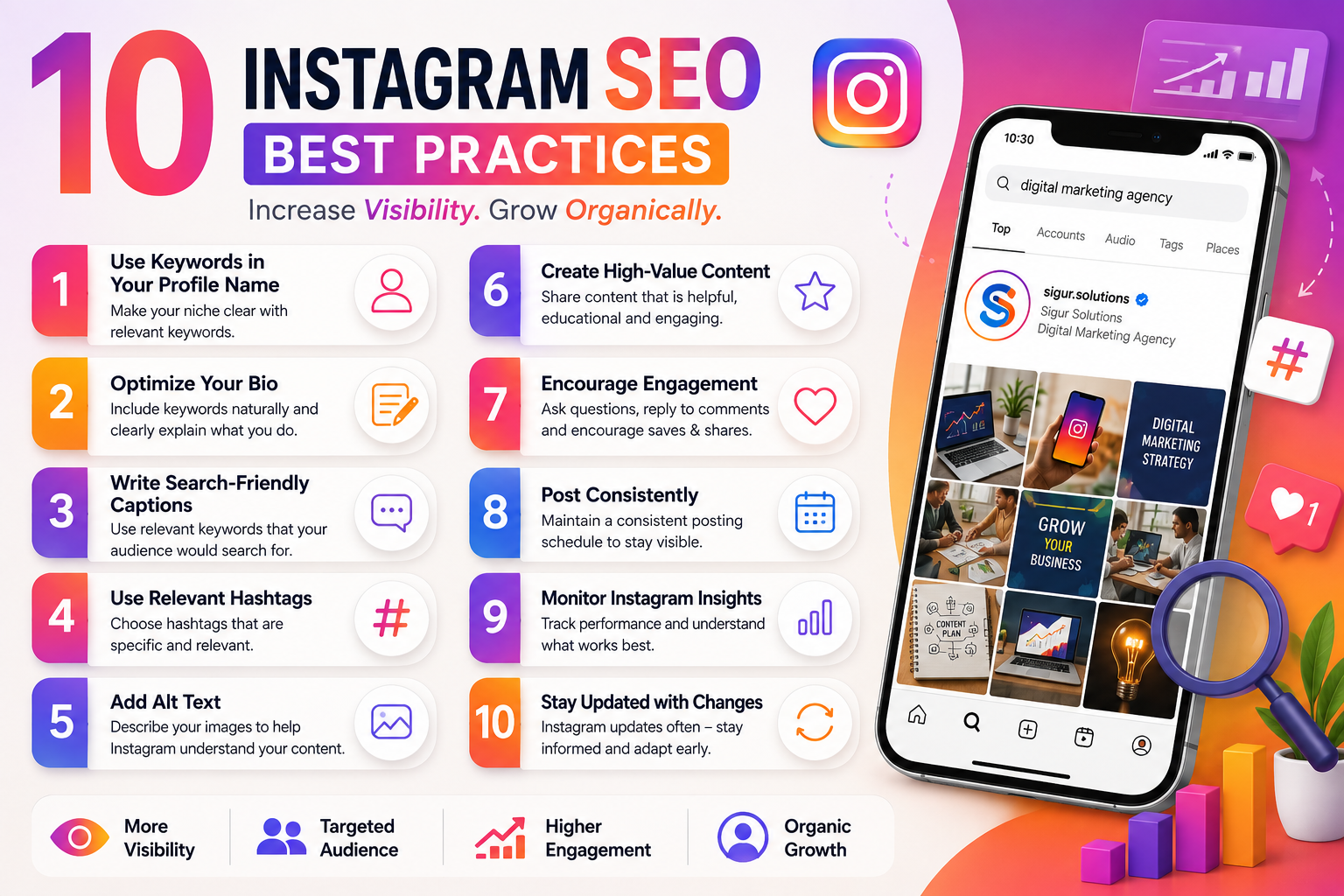
- Use Keywords in Your Profile Name
Your profile name should clearly describe your business and include a relevant keyword.
Example:
Sigur Solutions | Digital Marketing Agency
- Optimize Your Bio
Write a concise bio that naturally includes your services, expertise, and target audience.
Avoid keyword stuffing—focus on clarity and relevance.
- Write Search-Friendly Captions
Think about what your audience would search for.
Instead of:
“New post is live!”
Write:
“Learn how Instagram SEO can help your business increase visibility and grow organically.”
- Use Relevant Hashtags
Hashtags still play a role, but quality is more important than quantity.
Use hashtags that closely match your content instead of adding generic or unrelated tags.
- Add Alt Text
Optimizing image descriptions helps Instagram understand your content while improving accessibility.
- Create Valuable Content
Educational posts, tutorials, checklists, industry insights, and case studies are more likely to be saved and shared.
- Encourage Meaningful Engagement
Ask questions.
Invite opinions.
Encourage users to save and share your posts.
The more valuable your content is, the stronger your engagement signals become.
- Post Consistently
Maintain a consistent posting schedule.
Consistency helps both your audience and Instagram understand that your account is active and trustworthy.
- Monitor Instagram Insights
Track important metrics such as:
- Reach
- Profile visits
- Saves
- Shares
- Engagement rate
These insights help you understand what content performs best.
- Stay Updated with Instagram Changes
Instagram regularly updates its recommendation systems and search features.
Following official guidance from Meta helps ensure your strategy remains effective.
Learn more from Meta Creators:
https://creators.instagram.com/
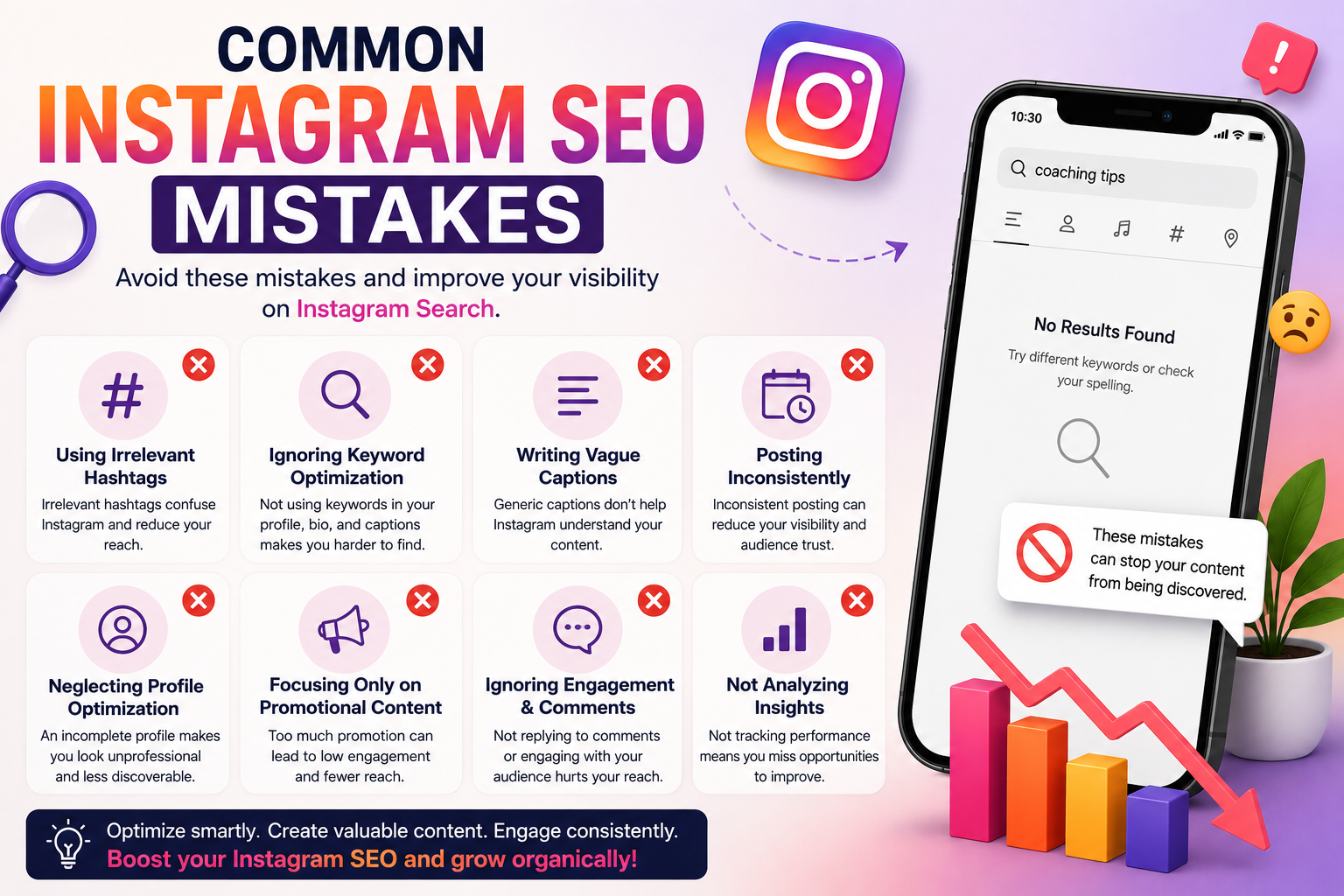
Common Instagram SEO Mistakes
Many businesses unknowingly reduce their visibility by:
- Ignoring keyword optimization
- Using irrelevant hashtags
- Writing vague captions
- Posting inconsistently
- Having an incomplete profile
- Publishing only promotional content
- Ignoring comments and engagement
- Not reviewing analytics
Avoiding these mistakes can significantly improve your organic reach over time.
Tools That Can Improve Your Instagram SEO
Several tools can help optimise your Instagram strategy:
- Instagram Insights – Analyse reach, engagement, profile visits, and audience behaviour.
- Meta Business Suite – Schedule content, manage accounts, and monitor performance.
- Google Trends – Discover trending topics and keywords that can inspire content ideas.
For additional guidance, visit:
Meta Creators
https://creators.instagram.com/
Meta Business Help Center – Search & Recommendations
https://help.instagram.com/613868662393739
As Instagram continues evolving into a search-driven platform, Instagram SEO is becoming just as important as traditional website SEO.
Businesses that optimise their profiles, create valuable content, and strategically use relevant keywords will have a much better chance of reaching new audiences organically.
Instead of relying solely on the algorithm or paid promotions, focus on creating informative, searchable, and engaging content that answers your audience’s questions.
Pairing Instagram SEO with strong website SEO and content marketing creates a sustainable digital marketing strategy that delivers long-term results.
If you’re also looking to improve your website’s search performance, don’t miss our guide on Key Tips for a Search Engine-Friendly Website:
https://sigursolutions.com/key-tips-for-a-search-engine-friendly-website/
By implementing these Instagram SEO best practices consistently, you’ll improve your discoverability, build stronger audience relationships, and create a foundation for sustainable organic growth.